Adult regulation
Children learn to regulate from calm adults. Calm is a practice we train, monitor and correct, not a personality we hire for.
Emotional safety is the product, not the atmosphere. We are built to settle a child, not to occupy one.
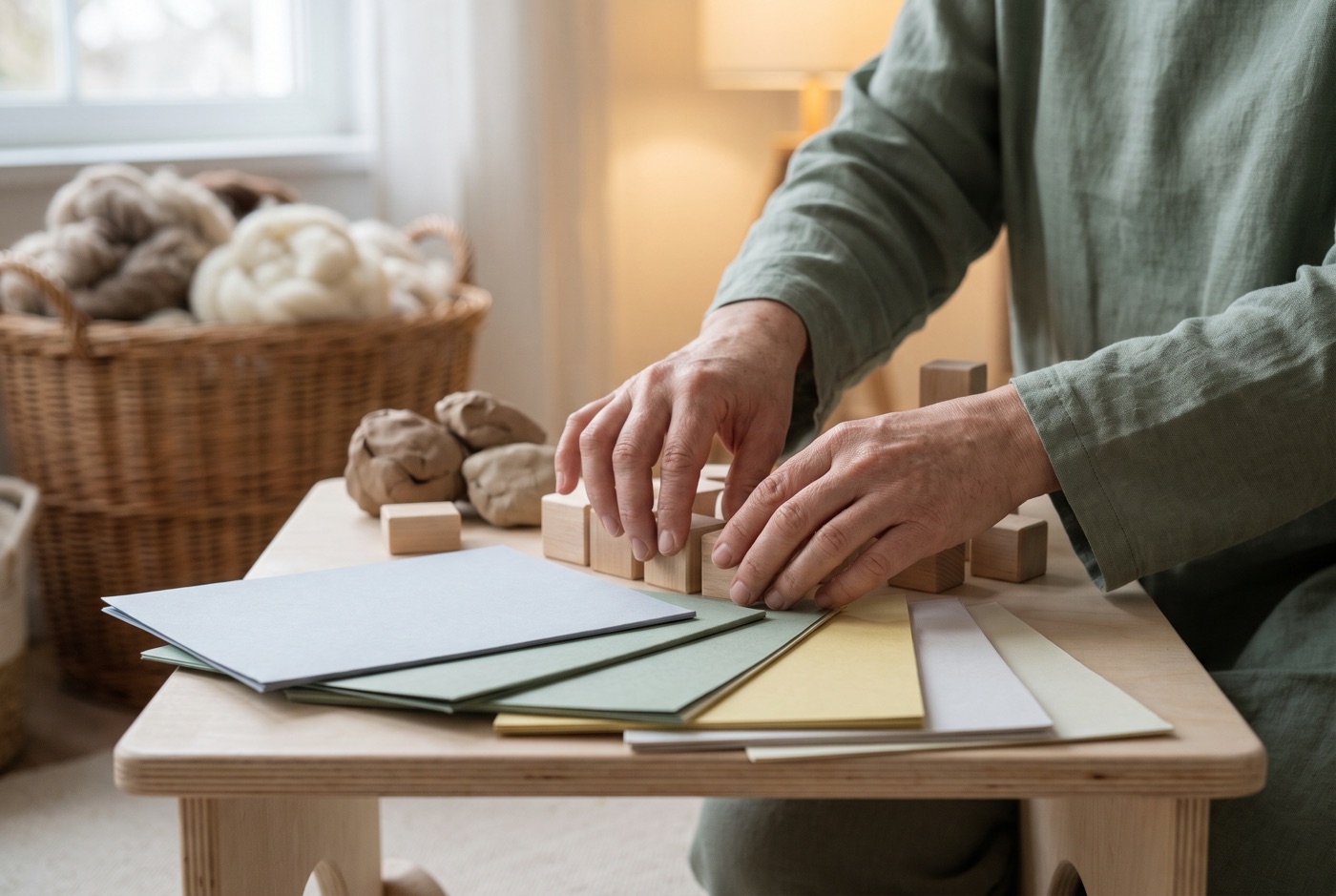
Young children settle and cope best when they feel emotionally safe. Most childcare at events assumes the opposite: that a child needs occupying. So they get noise, novelty and a room full of strangers, on a day when the building is already loud, the routine has gone, and the person they rely on has just walked out of the door.
We are built the other way round. The day is designed to bring a child's nervous system down, because everything else about an event day pushes it up. That calm is produced on purpose: a predictable routine, shared language between practitioners, and adults who regulate themselves before they ask it of a child.
We are not there to entertain a child through a day. We are there to hold one steadily through it.
A permanent setting has months to earn a child's trust. We have between four and forty minutes.
| What changes | A permanent setting | A mobile setting |
|---|---|---|
| Trust | Built up over months, with a familiar adult | Engineered in the first hour, by design |
| The room | Already known, needs no explaining | Learned in minutes, so it must read as safe within seconds |
| The adults | Familiar faces, every day | Strangers, so the key-person routine carries it |
So we design the first hour, and the room's layout, on purpose.
A written procedure, not an instinct. Every practitioner works to it.
Booking gathers what helps this child settle and what makes it worse. The lead reads every booking the night before.
Arrivals are spread across a window, so each child gets an adult's full attention at the door.
One named practitioner meets the child at their height, uses their name and gives them one thing to do. The parent is greeted second.
Short, confident and clear. We say when the parent will be back in the child's terms: after lunch, after the sleep. We never say ‘a few minutes’.
The same practitioner stays with that child. Distress is expected and stayed with, never distracted away.
Once the child has settled, the parent gets one short message saying so.
Past [the distress threshold: to confirm], we call the parent. Not as a failure: a child who cannot be held by strangers today should not be made to endure it.
This is the one thing a room with a parent in it cannot do.
Children learn to regulate from calm adults. Calm is a practice we train, monitor and correct, not a personality we hire for.
Long, uninterrupted, child-led play is where a child settles and makes sense of a strange day. It is never filler between activities.
Each change of activity costs a child calm they have not banked. So the day has long stretches and few edges.
A child reads a room before they read a face. Ours is visibly bounded, visibly calm, and obviously for them.
Assigned from the booking, with their name and photograph sent to the parent, so the child arrives to a face they have been shown. [Key-person wording: to confirm]
No mascots, no sudden music, no visiting entertainers. Novelty is the enemy of settling on a first day.
Movement, breath and stillness are used, not taught. Children's yoga is part of the day, never a class or a therapy.
A reply within two working days, then a scoping call.
Draft site. Copy is draft and the people in the images are AI-generated stand-ins. Not for publication.